How to Reduce Dust in Idaho Homes
You wipe down the coffee table on Monday, and by Wednesday there's a fresh gray film waiting for you. You are not imagining it, and you are not cleaning wrong. Homes across the Treasure Valley and the rest of Idaho collect dust faster than homes in wetter parts of the country, and there's a real reason for it.
Idaho sits in high desert. Dry air, low rainfall, wind off open range and farmland, and fine silty soil all combine to push a steady supply of fine dust toward your windows, vents, and doors. Add the drywall dust that keeps surfacing in newer builds, plus the everyday skin, fabric fibers, and pet dander from ordinary life, and you get surfaces that gray over within days. The good news is that once you understand where it comes from, you can cut it down a lot with a handful of habits and the right tools.
This guide walks through why Idaho homes get so dusty, where the dust actually comes from, and the practical, chemical-free steps that make the biggest difference — HEPA vacuuming, damp-dusting, the spots most people miss, and how often to do all of it. If you'd rather hand it off, we're a chemical-free house cleaning company based in Meridian, and you can reach us at +1 877-754-5614.
In this article
- 1. Why Idaho Homes Get So Dusty
- 2. Where the Dust Actually Comes From
- 3. HEPA Vacuuming and Damp-Dusting: The Two Habits That Matter Most
- 4. Don't Skip the Blinds, Vents, Tracks, and Baseboards
- 5. Your HVAC Filter and Doormats Do a Lot of the Work
- 6. How Often to Dust in an Idaho Home
- 7. Our Chemical-Free Approach to Dust
Why Idaho Homes Get So Dusty
Idaho is high desert country. Most of the state sits above 2,000 feet with less than a foot of rain a year, and warm, dry air pulls moisture out of the soil far faster than rain puts it back. Dry, loose ground is exactly what wind needs to lift fine particles into the air — and the Treasure Valley gets plenty of wind rolling in off open range and farm fields.
The soil makes it worse. Much of southern Idaho sits on silty, sandy ground with a weak structure. Once it's disturbed by tilling, planting, construction, or traffic, it breaks down into fine particles that lift easily on the next gust. Every spring and fall, when fields are worked and winds pick up, that agricultural dust travels for miles and settles on everything downwind — including the ledges, blinds, and sills inside your home.
Then there's the modern-Idaho factor: new construction. Meridian, Nampa, Caldwell, and the growing edges of Boise are full of recent builds, where fine drywall and construction dust keeps resurfacing in vents, tracks, and ceiling corners for months after move-in. Between the climate outside and the build inside, a home here simply has more raw material to turn into that gray film on your shelves.
Where the Dust Actually Comes From
Household dust isn't one thing. It's a mix, and knowing what's in it helps you target the sources instead of chasing the symptoms. You're really fighting on two fronts: some dust blows in from Idaho's dry outdoors, and some is generated inside the home. The routines that work address both. Here's what's usually in the pile on your shelf:
- Outdoor soil and pollen — the fine silt and agricultural dust that blows in through windows, doors, and gaps, heaviest in dry, windy months.
- Construction and drywall dust — a big one in newer builds, hiding in vents, tracks, and cabinet tops long after the builder's clean.
- Skin cells and hair — a surprising share of indoor dust is simply shed from the people who live there.
- Fabric fibers — carpet, upholstery, bedding, and clothing constantly shed tiny threads that settle as dust.
- Pet dander — dander and fur add to the load in any home with animals, and it clings to soft surfaces.
- Dirt tracked in on shoes — every trip in from the yard or driveway carries fine soil onto floors, where foot traffic grinds it into a powder that lifts back into the air.
HEPA Vacuuming and Damp-Dusting: The Two Habits That Matter Most
If you change only two things, change how you vacuum and how you dust. Most homes lose the dust battle because their tools stir dust up and move it around rather than capturing it — and in a dry climate, airborne dust just resettles somewhere else a few minutes later.
A vacuum with a sealed HEPA filter is the single best tool for the job. A true HEPA filter traps well over 99% of the fine particles it catches, so the dust stays in the machine instead of blowing back out the exhaust. A cheap bagless vacuum without good filtration often does the opposite, kicking the finest, most breathable particles right back into the room. Vacuum carpets, rugs, and upholstery, and don't skip hard floors — fine dust hides in the grain and along edges there too.
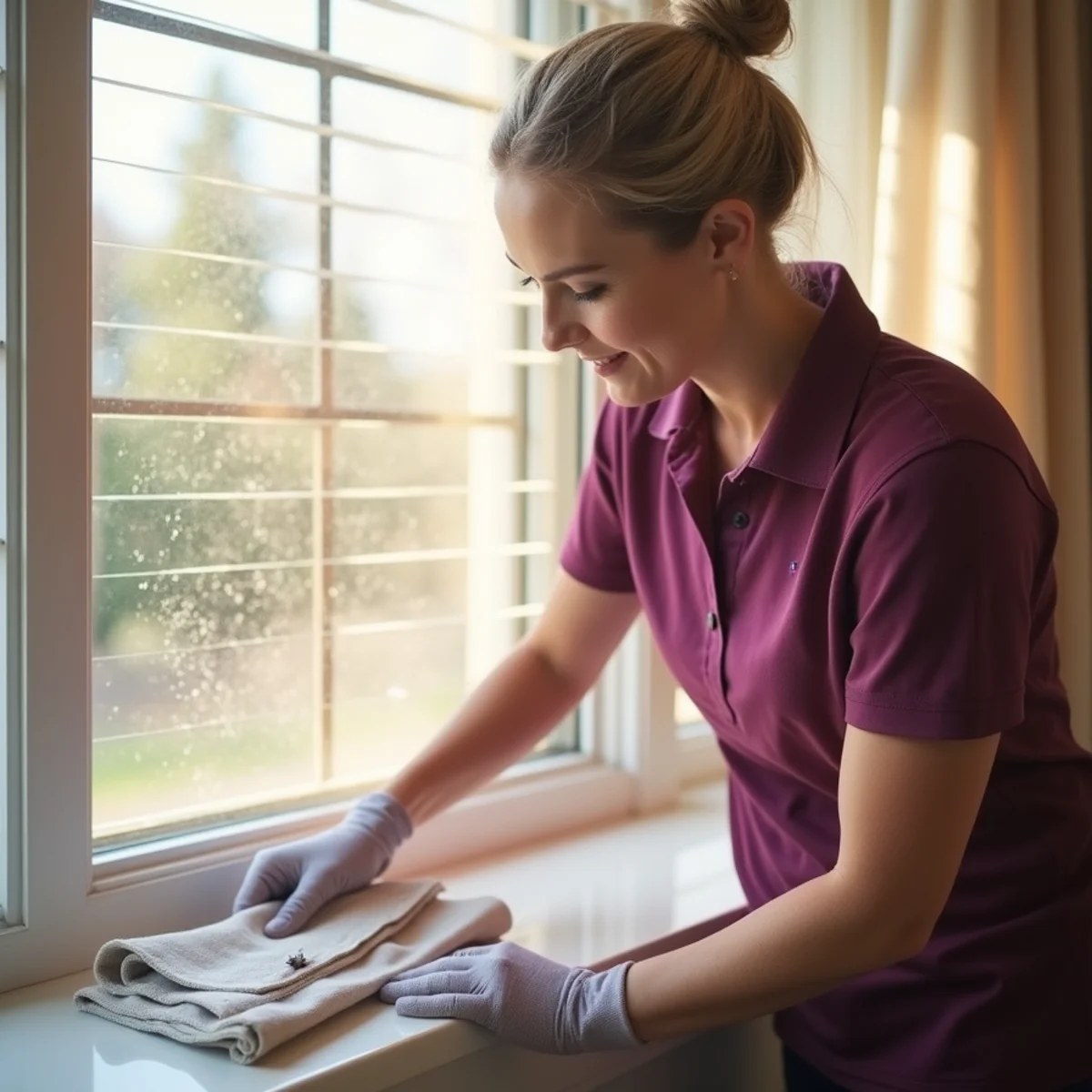
For surfaces, damp-dust instead of dry-dusting. A dry feather duster mostly relocates dust into the air, where it drifts back down onto the surface you just cleaned. A lightly damp microfiber cloth grabs the particles and holds them. Work top to bottom — high shelves first, then furniture, then floors last — so anything you knock loose lands where you haven't cleaned yet. None of this needs a chemical spray; plain water on microfiber does the capturing.
- Use a sealed HEPA vacuum so the fine dust stays trapped instead of blowing back into the room.
- Reach for damp microfiber over dry dusters and paper towels — damp cloths hold dust, dry ones scatter it.
- Always work high to low so falling dust lands where you'll clean next, not where you've finished.
- Rinse or swap cloths often — a loaded cloth just smears dust around once it's full.
Don't Skip the Blinds, Vents, Tracks, and Baseboards
The gray film on your coffee table is the dust you notice. The dust that keeps feeding it lives on the surfaces most people never touch — the ledges and edges where fine Idaho dust settles quietly, then gets stirred back into the air every time the furnace kicks on or a door opens.
Window tracks and sills take the brunt of it, because that's where outdoor dust enters and pools. Horizontal blinds are dust magnets, collecting a layer on every slat. Vents pull dust in and blow it around, so a dusty vent cover reseeds the whole room. And baseboards, door frames, and ceiling corners catch the fine stuff that drifts down, especially in newer homes still shedding construction dust.
Give these spots a real pass, not a quick swipe. Wipe blind slats with a damp microfiber cloth, top slat down. Vacuum window tracks with a crevice tool, then wipe them out damp. Pull vent covers where you can, vacuum the grille, and wipe it down. Run a damp cloth along baseboards and door frames last, since they're low and catch whatever fell during the rest of the clean. Hitting these hidden reservoirs is the difference between dust that keeps coming back and dust that stays down.
Your HVAC Filter and Doormats Do a Lot of the Work
Two low-effort changes quietly reduce how much dust ever reaches your surfaces: the filter in your furnace and the mats at your doors. Both work in the background, and both get overlooked.
Your HVAC system circulates the air in your home all day, and its filter is the net catching dust as that air passes through. A clogged, months-old filter stops catching and starts letting fine dust recirculate through every room. Check it monthly and change it every 30 to 90 days for most homes — closer to 30 if you have pets, heavy foot traffic, or a newer build still shedding drywall dust. A filter with a MERV rating around 11 to 13 captures finer particles than the cheapest options, as long as your system is rated for it. Running the fan for a bit after you clean also pulls the dust you stirred up straight into the filter.
At the doors, good mats stop dirt before it becomes dust. A lot of household dust starts as fine Idaho soil ground off shoe soles and worked into the floor. A quality mat at every entry — one outside and one inside each main door — catches the bulk of it, and going shoes-off indoors helps even more. Shake out or vacuum the mats weekly so they keep working instead of becoming a dust source themselves.
- Check the HVAC filter monthly, replace every 30 to 90 days, sooner with pets or a new build.
- Use a MERV 11 to 13 filter if your system supports it, for finer capture.
- Put a mat at every entrance, inside and out, and go shoes-off when you can.
- Clean the mats weekly so they trap dirt instead of releasing it.
How Often to Dust in an Idaho Home
Because our dry climate keeps producing dust, a set rhythm beats waiting until surfaces look gray. Frequency depends on your home, but here's a realistic baseline for the Treasure Valley and beyond, adjusted up for pets, allergies, open windows in dusty season, or a newer build.
If keeping that rhythm on top of everything else isn't realistic, that's exactly where a standing clean helps. A regular standard cleaning keeps the weekly and biweekly tasks handled so dust never gets a chance to build, and a periodic deep cleaning resets the hidden spots — vents, tracks, baseboards, and high ledges — that a quick pass never reaches. Here's a schedule to work from:
- Weekly: damp-dust the surfaces you use and see daily, HEPA vacuum carpets and high-traffic floors, and shake out the doormats.
- Every two to four weeks: blinds, window sills and tracks, baseboards, and vent covers — the reservoirs that quietly refeed the room.
- Monthly: check the HVAC filter, and vacuum upholstery, under furniture, and the edges of rooms where dust hides.
- Seasonally: a deeper reset in spring and fall when field work and wind push the most dust into homes, plus ceiling corners, fan blades, and the tops of tall furniture and cabinets.
Our Chemical-Free Approach to Dust
You don't need harsh chemicals to control dust — you need the right technique and the right tools. Dust is a mechanical problem, not a chemistry one: it's about capturing fine particles instead of scattering them. That's why our whole approach is built on HEPA vacuuming, damp microfiber, and working high to low, all of it chemical-free and safe for the kids and pets in your home.
We also know where Idaho dust hides, because we clean these homes every week. In newer builds around Meridian and Nampa, we target the vents, tracks, and ledges where construction dust keeps resurfacing. In established homes and out toward Twin Falls, we handle the fine agricultural and high-desert dust that settles on blinds and baseboards. We damp-dust to capture it, not push it around — which is the difference between a home that looks clean for a day and one that stays clear.
If you're tired of dusting the same shelf twice a week, let us take it off your plate. Call +1 877-754-5614 or request a free quote, and we'll keep your Idaho home genuinely dust-managed — chemical-free.
Want it done for you?
Chemical-free house cleaning across Idaho. Free quotes, no obligation.