Deep Cleaning vs Standard Cleaning: What Idaho Homeowners Should Know
If you've ever booked a house cleaning and wondered why one option costs more and takes twice as long, you've run into the difference between a standard clean and a deep clean. They sound similar, and they overlap, but they're built for two very different jobs. One keeps a home that's already in good shape looking that way. The other reaches everything a routine visit leaves for later and brings a home back to a true baseline.
The short version most people find helpful: a standard clean maintains, and a deep clean resets. Picking the wrong one wastes money or leaves you disappointed — a standard clean on a home that's fallen behind can't reach months of build-up, and a deep clean on an already-maintained home pays for work that doesn't need doing. Knowing which you actually need starts with an honest look at your home.
This guide breaks down exactly what each clean covers, when to choose which, and how the two work together over time. We're a chemical-free cleaning company based in Meridian, and we clean homes across Idaho every week, so the examples here are the real conditions we see in Treasure Valley houses. If you'd rather just talk it through, call +1 877-754-5614 for a free, no-obligation quote and we'll tell you honestly which one your home needs.
In this article
What a Standard Clean Actually Covers
A standard clean is routine maintenance — the top-to-bottom upkeep that keeps a home from ever getting away from you. It focuses on the surfaces you see and touch every day: kitchen counters and the outside of appliances, bathroom fixtures and toilets, dusting the reachable surfaces, and vacuuming and mopping the floors. It's the work that quietly makes a house feel handled instead of "getting to it this weekend."
This is our most-booked service, and most homes run it on a weekly or bi-weekly recurring rhythm. The point isn't to reach every hidden corner on every visit — it's to keep the whole home consistently fresh with a repeatable, efficient clean. Because it doesn't tackle heavy build-up, it takes less time and costs less than a deep clean.
Here's what a standard clean typically includes:
- Kitchen: counters, backsplash, sink, stovetop, and appliance exteriors wiped down
- Bathrooms: toilets, showers, tubs, sinks, mirrors, and fixtures cleaned and sanitized
- Dusting of reachable surfaces, shelves, and furniture
- Floors vacuumed and mopped throughout
- Light switches, door handles, and reachable cobwebs
- Trash emptied and liners replaced
What a Deep Clean Adds on Top
A deep clean includes everything in a standard clean and then keeps going into the places a routine visit doesn't reach. This is the reset — the clean that handles the grime that's had weeks or months to settle and harden. Where a standard clean wipes the surface, a deep clean gets behind it, beneath it, and inside it.
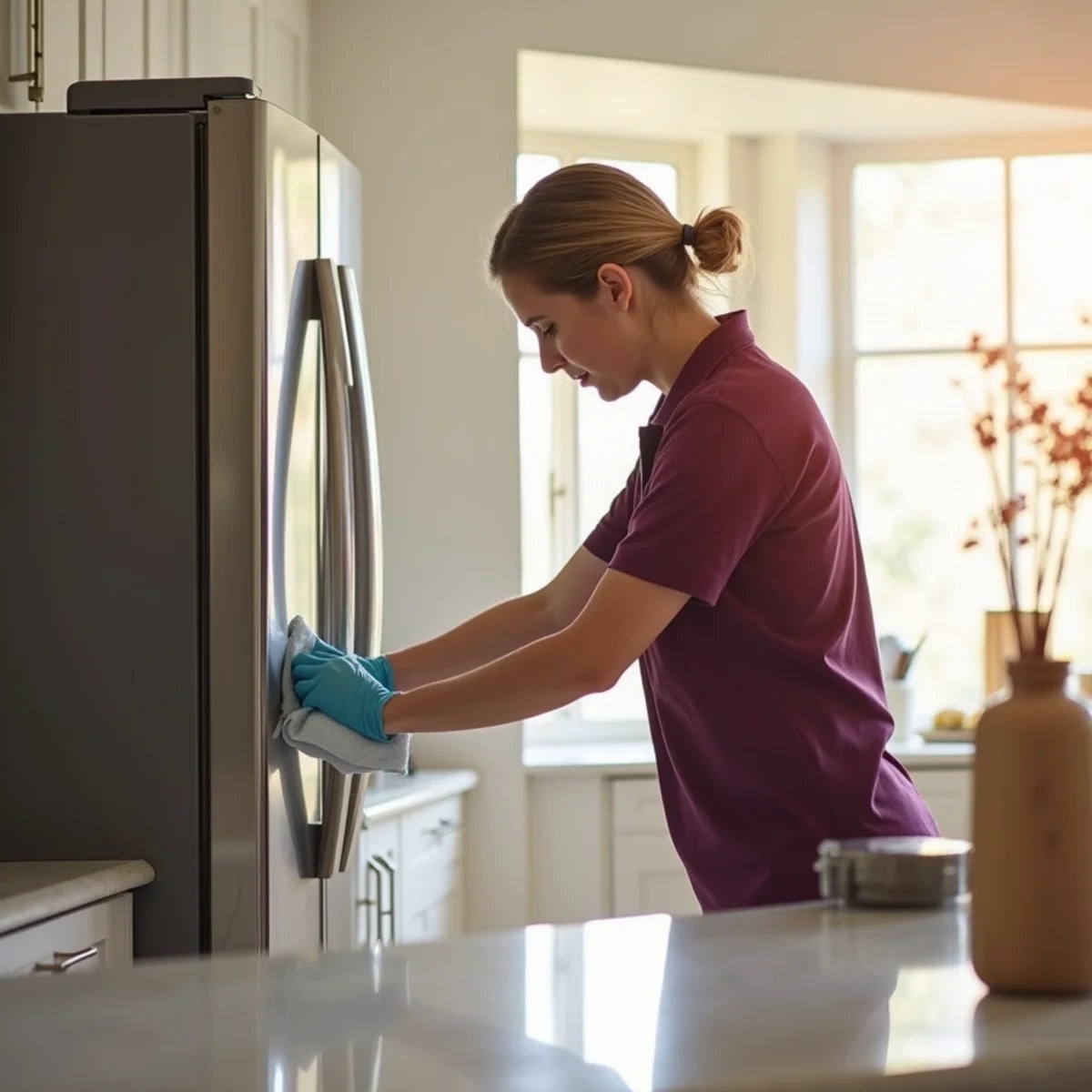
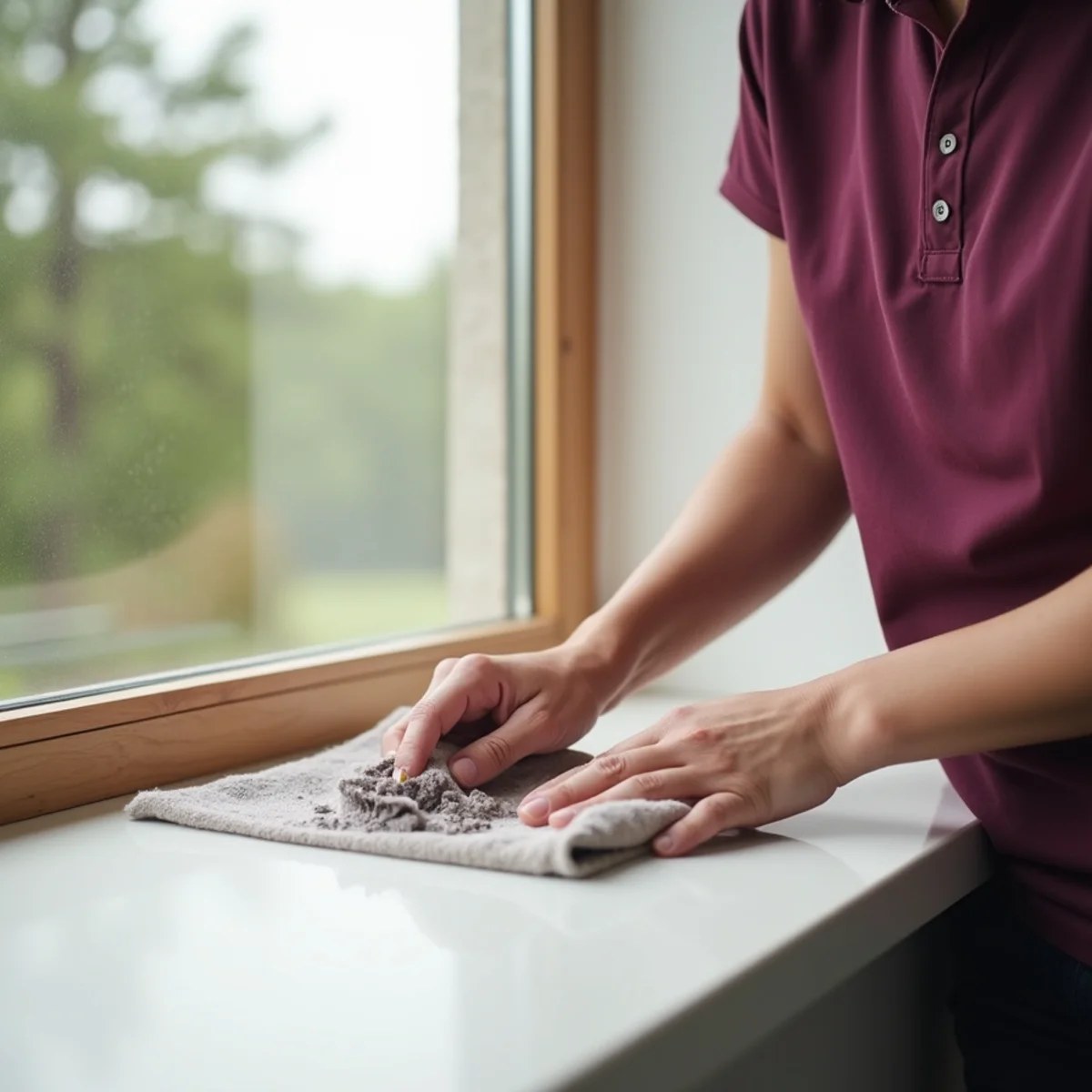
The kitchen and bathrooms get the most extra attention because they hold the most build-up. In the kitchen, that means degreasing the stovetop and hood, wiping cabinet fronts, and cleaning inside the microwave — with inside the oven and fridge available on request. In the bathroom, it means scrubbing tile and grout, de-scaling hard water from shower glass and fixtures, and sanitizing toilets inside, outside, and at the base. Throughout the home, a deep clean adds the detail work: baseboards, door frames, window sills and tracks, blinds, ceiling fans, vents, and the dust and grime that collect behind and beneath furniture.
If you want the full room-by-room picture, we've written a separate breakdown of what's included in a deep clean. The extra scope is exactly why a deep clean takes longer and costs more — there's simply more work involved.
The additions a deep clean brings over a standard visit:
- Baseboards, door frames, trim, and window sills wiped down
- Blinds, window tracks, ceiling fans, and vents detailed
- Inside the microwave — plus oven and fridge on request
- Tile and grout scrubbed of soap and mineral build-up
- Hard water de-scaled on glass and fixtures
- Behind and beneath reachable furniture and appliances
Deep Clean vs Standard Clean: A Side-by-Side Look
It helps to see the two lined up. The difference isn't only what gets cleaned — it's the purpose, the time, and how often you'd book each one. A standard clean is designed to be quick and repeatable so it fits into a regular schedule without disrupting your week. A deep clean is a bigger, one-time project meant to clear a backlog.
Here's how they compare on the points that matter most when you're deciding:
- Purpose — Standard: maintain an already-clean home. Deep: reset a home that's fallen behind or never been professionally cleaned.
- Scope — Standard: everyday surfaces, floors, kitchen, and baths. Deep: all of that plus baseboards, inside appliances, tile and grout, hard water, and behind furniture.
- Time — Standard: a routine visit. Deep: noticeably longer, since there's far more to reach.
- Frequency — Standard: weekly, bi-weekly, or monthly. Deep: once or twice a year for most homes.
- Cost — Standard: lower, because it's less work. Deep: higher, because the scope is bigger.
- Best for — Standard: keeping a baseline. Deep: creating one.
Which One Does Your Home Need?
The simplest test: if you can't remember the last time your baseboards, blinds, or the inside of your oven were cleaned, you want a deep clean. Look at the places you never think about — under the bathroom sink, the window tracks, the top of the fridge, the grout in the shower. If those areas have visible build-up, a standard clean can't fix it in one pass, and trying to force it into one leaves you underwhelmed.
On the other hand, if your home is generally kept up and you just want the routine handled well — the counters, the bathrooms, the floors, the dusting — a standard clean is the right and more economical fit. You don't need to pay for deep detail work on a home that isn't carrying months of grime.
A few clear signals that point to a deep clean first:
For most Idaho homes we work with, the answer is a deep clean to start, then standard visits to maintain. First-time clients in particular almost always benefit from a deep clean up front — it's hard to maintain a baseline that was never set. If you're genuinely unsure, that's exactly what the free quote is for: we'll give you an honest read rather than pushing the bigger job.
- It's been longer than a month or two since a professional clean — or you've never had one
- Hard water has clouded the shower glass and crusted the faucets
- Baseboards, blinds, vents, and window tracks are visibly dusty
- You're prepping for guests, a party, a holiday, or a new baby
- Allergies are acting up and fine dust and dander have built up in the corners
How the Two Work Together Over Time
The most cost-effective approach for most homes isn't choosing one over the other — it's using them in sequence. Start with a single deep clean to bring the whole home to a baseline, then keep it there with standard recurring visits. You pay for the heavy reset once, and every visit after that is lighter, faster, and cheaper because the build-up never gets a chance to harden again.
This is why a maintained home is quicker to clean each time, and why recurring standard cleaning is our best value. A home that gets a routine visit every week or two rarely needs the full deep treatment again — the dust, grease, and hard water simply don't accumulate the way they do in a home that goes months between cleans. Skipping the initial deep clean tends to backfire: without a reset, each standard visit spends time fighting old build-up instead of maintaining a genuinely clean home.
Moving in or out is a separate case worth knowing. When a home needs to be empty-clean for a landlord, a buyer, or your own fresh start, a move-out clean is the deep clean built for an empty house — inside every cabinet, closet, and appliance, since nothing's in the way. If you're renting, our move-out cleaning checklist for Idaho renters walks through what landlords actually inspect.
Why the Difference Matters More in Idaho
The gap between a standard clean and a deep clean is wider here than in gentler climates, because Idaho homes collect a specific kind of grime. Treasure Valley hard water is the big one — the minerals cloud shower glass, crust around faucets, and leave that stubborn white film on fixtures that ordinary wiping won't touch. A standard clean treats the hard water it can reach, but years of mineral scale need the de-scaling that only a deep clean does properly.
Dust is the other Idaho factor. Between high-desert conditions and nearby farmland, a fine dust settles fast on blinds, baseboards, vents, and window tracks — the exact places a standard clean isn't built to detail on every visit. Add spring pollen coating the sills and the road salt and mud winter drags through the entryway, and you have a home that benefits from a periodic reset even if you keep up with routine cleaning. This is also why so many Idaho households time a deep clean to the seasons — a spring reset after pollen or a fall one before the holidays.
New construction is common across Meridian, Nampa, and the growing Treasure Valley, and new builds hide fine drywall dust in vents, tracks, and cabinets long after the builder's clean. That's deep-clean or post-construction territory, not something a standard visit resolves. Whichever your home needs, we clean chemical-free from start to finish — no harsh smell, no headache, safe around kids and pets — and we'll tell you straight which clean fits when you call for your quote.
Want it done for you?
Chemical-free house cleaning across Idaho. Free quotes, no obligation.